
Describe the move first
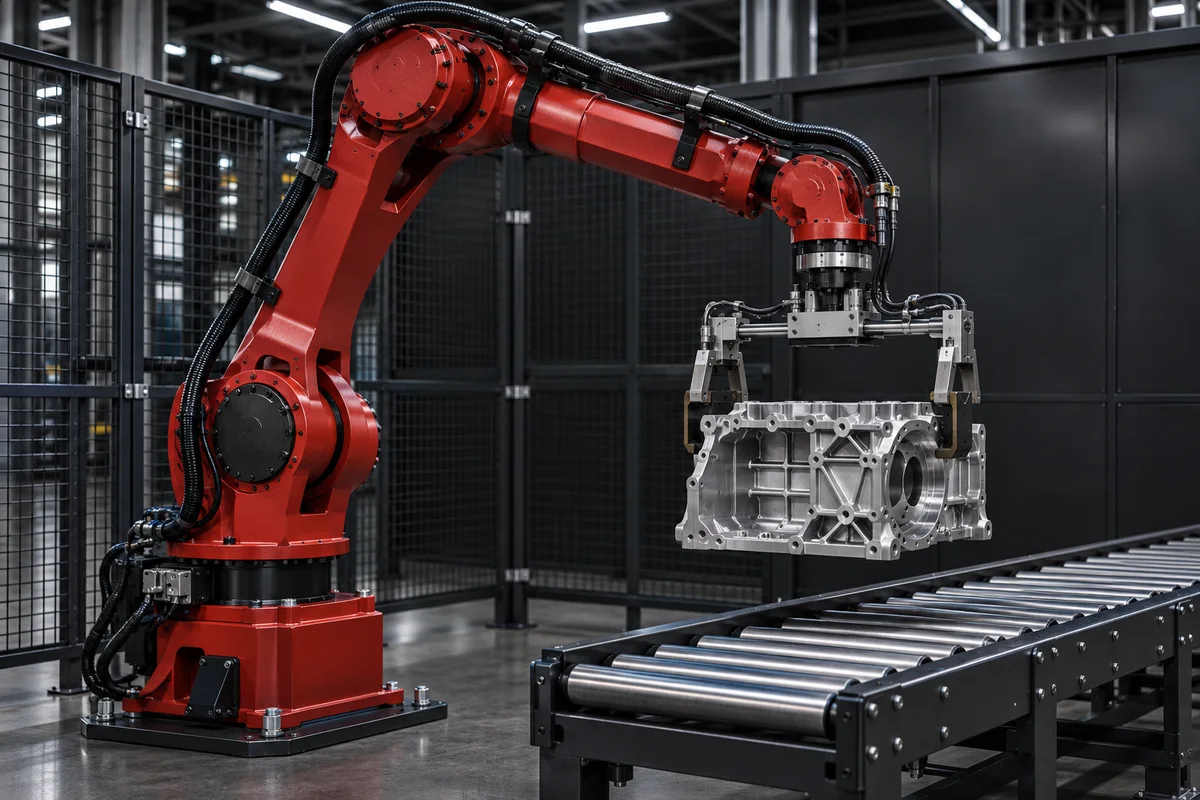
Start with one production cycle. Record where the part arrives, how the tool approaches it, where it goes next and what confirms a successful transfer. Include the range of part sizes and orientations the station has to handle.
Sketch the machines, conveyors, fixtures and areas needed for loading and servicing. A simple drawing with pickup and drop-off points is more useful for a first comparison than a robot model number.
Check load and reach together
Count the workpiece, gripper, adapter and other equipment attached to the flange when estimating the moving load. Record where that combined mass sits relative to the flange. A long tool can make a load more demanding even when the part weight stays the same.
Compare the full path and tool orientation with the manufacturer’s reach and load data. Check access around the fixture at both endpoints and at intermediate points where the tool has to turn.
Time the complete cycle
Allow for grip confirmation, machine handshakes, part release and the return move. If an upstream machine runs at a variable rate, record both the typical and peak arrivals. Ask for a cycle estimate based on that sequence and the proposed tool before selecting a configuration.